
Blog
Search for the insights

15/05/2026
Atomic-Level Defects in FETs: An Invisible Challenge in Modern Semiconductor Manufacturing
Field-effect transistors (FETs) are the fundamental building blocks of modern electronics, enabling everything from mobile devices and automotive systems to advanced computing and communications. As
Read More →

08/05/2026
Case Study – Low temperature ALP™ process for Back-End-Of-the-Line (BEOL) sensors.
Leakage current is a critical limiter of sensor performance, yield, and reliability. The leakage current is one of the few parameters that directly impacts both
Read More →

30/04/2026
The Butterfly Effect of Silicon: How Atomic Defects Drive Business Failures
In the semiconductor industry, we often find ourselves caught between two worlds: the infinitesimal realm of quantum mechanics and the high-stakes theater of global business.
Read More →

24/04/2026
The Atomic Battlefield: Why Detection Alone Won’t Save Next-Gen Yields
For semiconductor professionals, the battle for yield has always been fought at ever-shrinking scales. But since the turn of the millennium, we have entered a
Read More →

17/04/2026
Atomic-Level Defects in CMOS Image Sensors: The Hidden Cost of Impurity
For CMOS imaging sensor (CIS) manufacturers, atomic-scale contamination is no longer a background variable — it is a primary driver of yield loss, noise performance
Read More →
10/04/2026
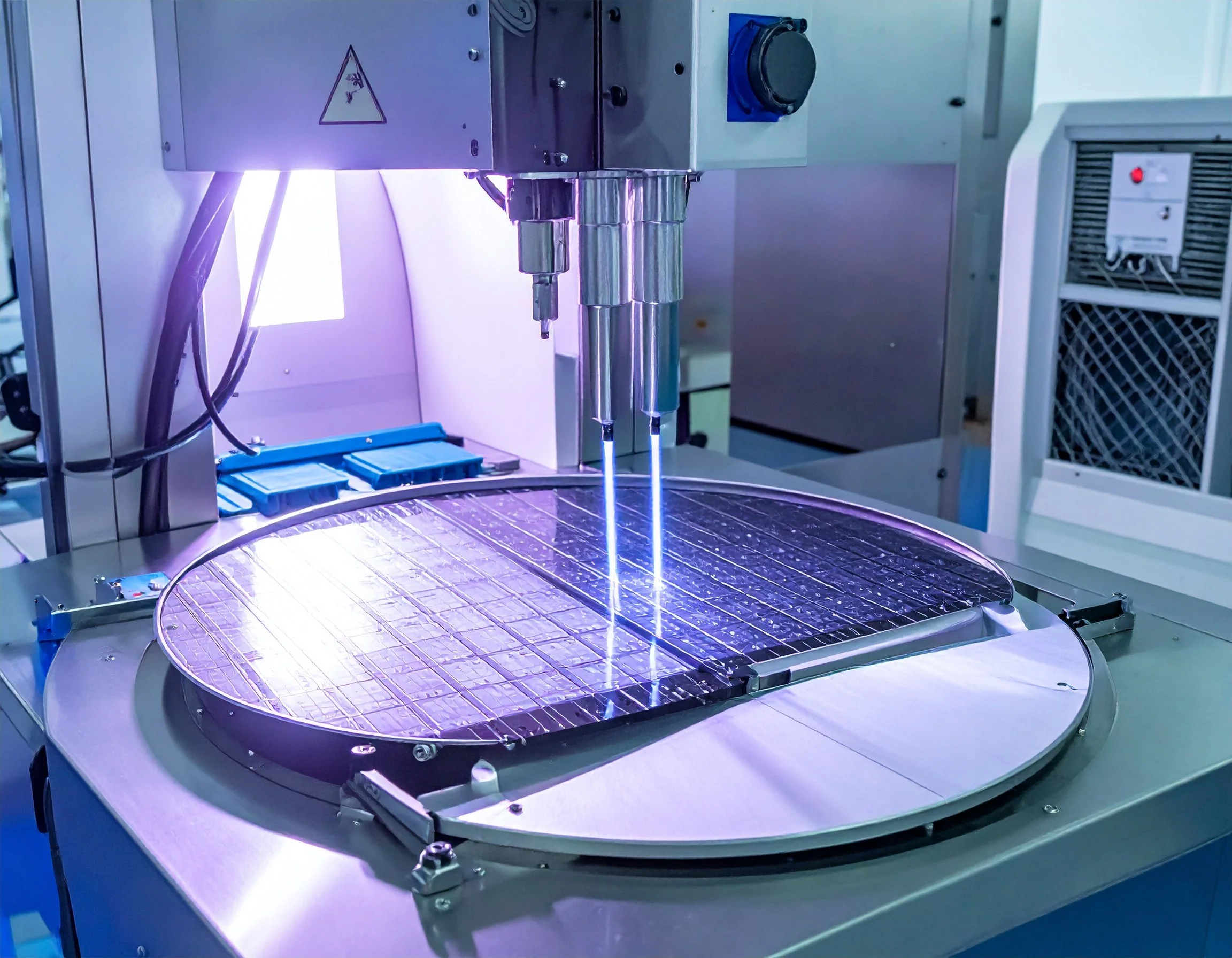
The Hidden Threat: How Atomic-Level Defects and Contamination Challenge Lithography in Semiconductor Fabrication
In the race toward ever-smaller and more powerful semiconductor devices, the margin for error has become vanishingly thin. At advanced process nodes — like 5nm,
Read More →

27/03/2026
Chemical SiO2 – The Hidden Weak Link in Advanced Chips
As chips become smaller and more powerful, one tiny layer – just a few atoms thick – now determines whether a product meets its performance,
Read More →

13/03/2026
Reducing Leakage Current in Advanced Semiconductor Devices
Leakage current is an increasingly visible constraint in modern semiconductor technology causing limitations for business and component performance. In advanced devices with smaller node sizes,
Read More →

06/03/2026
ALP™ – Atomic Level Purification
ALP™ (Atomic Level Purification) is a semiconductor interface engineering methodology designed to restore atomic lattice order, reduce carbon and hydrogen contamination, and suppress interface trap
Read More →

27/02/2026
Beyond the Decoherence Barrier: How SisuSemi’s ALP Technology is Solving the Quantum Bottleneck
In the semiconductor industry, we have spent decades perfecting the art of “small.” We have mastered the 3nm node and are currently pushing into the
Read More →